Maintain Energy During Long Distance Cycling on Carnivore
Table of Contents
- Fueling Strategy for Long-Distance Cycling on Carnivore
- What to Eat Before a Long Bike Ride on Carnivore
- On-Bike Fueling: Food and Fluid Intake During Rides
- Carnivore Diet Electrolytes for Athletes and Hydration
- How Long Does It Take to Adapt to a Carnivore Diet for Exercise
- Carnivore Diet Recovery Meal After Cycling
- Energy Management, Pacing, and Ride Duration
- Common Mistakes to Avoid When Fueling Long Rides on Carnivore
- Frequently Asked Questions
Last Updated: October 10, 2026
Fueling Strategy for Long-Distance Cycling on Carnivore
Maintaining energy levels long distance cycling carnivore requires a different approach than traditional high-carbohydrate endurance fueling. Your body runs on fat and protein instead of carbs, which means your fueling strategy needs to match that reality. The good news: many cyclists find they can sustain longer rides with stable energy once they adapt properly.
At Carnivore Solutions Inc, we provide high-quality, no-nonsense nutritional supplements and snacks specifically formulated for those following carnivore and low-carb lifestyles. You don't need sugar crashes or mystery ingredients to go the distance.

The core principle is simple: fuel with foods your body recognizes. Skip the gels, sports drinks loaded with corn syrup, and processed bars. Instead, use portable animal products and strategic electrolyte replacement. Your aerobic effort on long rides depends on consistent energy availability, not on carbohydrate timing alone.
What to Eat Before a Long Bike Ride on Carnivore
Your pre-ride meal sets the tone for the entire ride. Eat 2-3 hours before you start. This gives your body time to digest without feeling heavy on the bike.
A solid pre-ride meal includes protein and fat. Skip the carbs entirely, they'll spike your blood sugar and leave you crashed 45 minutes in. Instead, try:
- 3-4 ounces of beef or salmon with butter
- A few eggs cooked in animal fat
- Beef jerky with cheese
- Bone broth with collagen
Keep it simple and familiar. Your stomach should feel settled, not full. The goal is substrate availability, not volume.
Timing matters. Eating too close to the ride causes digestive stress. Eating too far away leaves you hungry mid-ride. Two to three hours is the sweet spot for most riders. If you're doing an early morning ride, eat 30-45 minutes before departure if a full meal isn't practical. A small amount of beef jerky or a couple of hard-boiled eggs works fine.
Hydrate well before you start, but not so much that you're sloshing. Drink water steadily in the hour before departure.
On-Bike Fueling: Food and Fluid Intake During Rides
What you eat during the ride depends on ride duration. Rides under 90 minutes need minimal fuel if you ate well beforehand. Rides over two hours require deliberate fueling every 45-60 minutes.
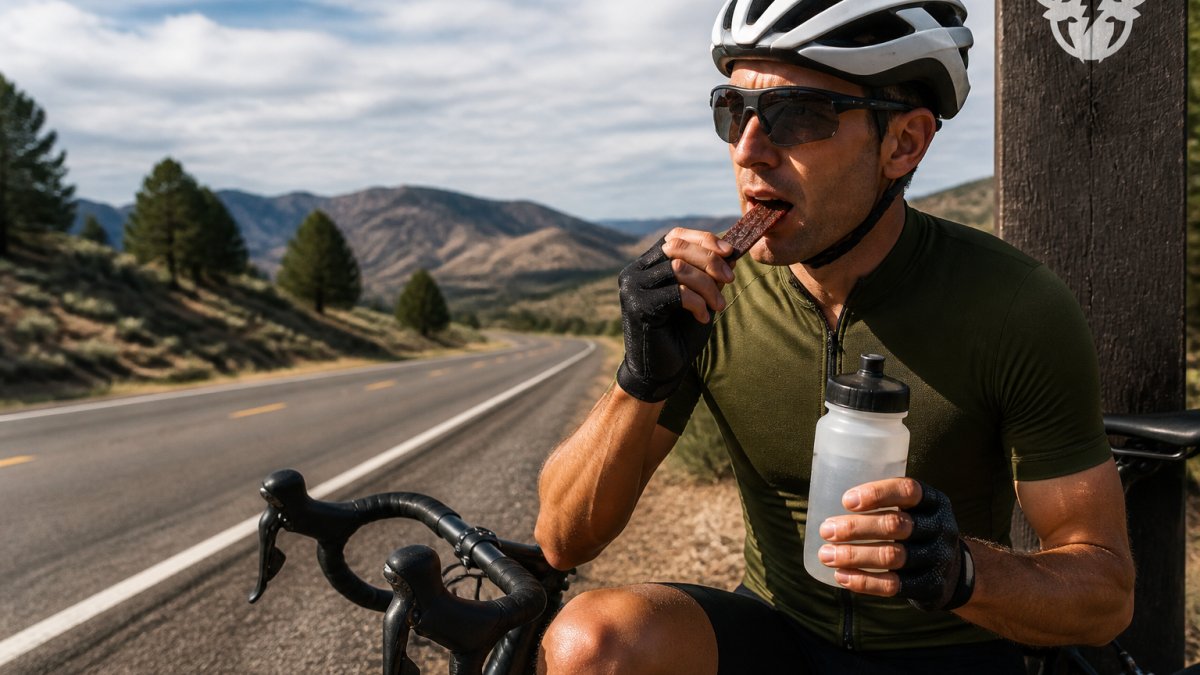
The rule most guides miss: low-carbohydrate riders need frequent eating. Your fat-adapted metabolism is efficient, but it still needs fuel arriving regularly. Waiting too long between eating leads to energy crashes and poor pacing.
Drink fluids consistently throughout the ride. Plain water works, but it doesn't replace electrolytes. This is where strategic supplementation helps. Your body loses sodium and potassium through sweat. On a long ride, this loss accumulates fast. Without replacement, you hit a wall that feels like bonking but is actually electrolyte depletion.
Portable, Easy-to-Digest Ride Foods for Carnivore Athletes
Choose foods that don't require digestion effort. Your body is working hard. Complex or heavy foods slow you down.
Best on-bike options:
- Beef jerky: 1-2 ounces every 45-60 minutes. Chew thoroughly. It's nutrient-dense and travels well.
- Carnivore beef jerky sticks: Portion-controlled and convenient. Grab one from your jersey pocket.
- Hard cheese: Small pieces of aged cheddar or parmesan. Calorie-dense and stable in warm weather.
- Bone broth in a bottle: Sip between solid food. Provides minerals and amino acids without heavy digestion.
- Salted butter packets: Yes, really. A tablespoon mid-ride adds quick fat calories. Wrap them in foil to prevent melting.
Avoid anything that requires chewing for more than a few seconds. Avoid anything that leaves residue in your teeth. Avoid anything that causes digestive stress.
The Carnivore Solutions Inc beef jerky sticks work well here because they're pre-portioned and made with just three ingredients: grass-fed beef, bone broth, and sea salt. No fillers. No mystery ingredients that upset your stomach mid-ride.
Carbohydrate Intake and Glycogen Availability on Low-Carb Fueling
Your body can sustain aerobic effort on fat and protein alone, but only if you're properly adapted.
Glycogen (stored carbohydrate) matters less on a carnivore diet because you're not relying on it. Your liver and muscles store minimal glycogen. Instead, you're using fat as your primary fuel.
The adaptation takes time. During this transition, rides feel harder. Your pace drops. Your power output dips. This is normal. It's not underfueling, it's adaptation.
If you're new to carnivore cycling, expect ride duration and intensity to feel different for the first month. Your aerobic threshold shifts. Pacing that felt easy on carbs now feels hard. This passes.
Some carnivore cyclists add small amounts of carbohydrates on very long rides (over 3-4 hours). A single banana or a few rice cakes mid-ride can provide quick energy without derailing your diet. This is optional and depends on your adaptation level and ride intensity.
Carnivore Diet Electrolytes for Athletes and Hydration
Electrolytes are where carnivore cyclists often fail. You can't ignore them. Sweat loss is real. Electrolyte depletion is real. The consequences are cramping, fatigue, and poor performance.
Your body needs sodium, potassium, and magnesium to function. Carnivore foods provide some minerals, but not enough to cover the loss during a long ride. This is where supplementation becomes essential, not optional.
Plain water alone is insufficient. Drinking only water on a long ride dilutes your blood sodium, which causes a condition called hyponatremia. Your muscles cramp. Your legs feel heavy. Your mind gets foggy.
Use an electrolyte powder designed for low-carbohydrate athletes. The Unflavored Electrolytes Powder from Carnivore Solutions Inc provides sodium, potassium, and magnesium without sugar or artificial sweeteners.

Hydration strategy: drink to thirst, not to a rigid schedule. On warm days, you'll drink more. On cool days, less. Listen to your body.
How Long Does It Take to Adapt to a Carnivore Diet for Exercise
Adaptation to a carnivore diet for cycling takes time. Most athletes report noticeable changes within 2-3 weeks. Full adaptation takes 6-12 weeks.
The timeline varies based on your previous diet. If you're coming from a standard high-carb diet, expect a longer transition.
Week 1-2: Your body is confused. Rides feel sluggish. Your power output drops. This is normal. Your system is learning to access fat stores.
Week 3-4: Energy starts to stabilize. Rides feel more normal. Your pace improves slightly.
Week 5-8: You notice improved endurance. Longer rides feel easier. Your aerobic effort feels more sustainable.
Week 8-12: Full adaptation. Your aerobic system is efficient on fat. You can sustain long rides without energy crashes.
Don't judge your fitness during the first month. Your actual fitness hasn't changed. Your fuel system has. Once adaptation completes, most cyclists report better endurance and more stable energy.
Unflavored Electrolytes Powder →
Distinguishing Adaptation Symptoms from Underfueling
This is critical. Adaptation and underfueling feel similar, but they require different responses.
Adaptation symptoms (normal, temporary):
- Rides feel harder for 2-4 weeks
- Your pace is slower than before
- You feel fatigued during rides but recover quickly
- You sleep better than before
- Your resting heart rate drops over time
Underfueling symptoms (urgent, needs fixing):
- You feel dizzy or lightheaded during rides
- Your legs cramp severely mid-ride
- You can't recover from rides for days
- Your mood drops significantly
- You lose power progressively through the ride
The difference: adaptation is a temporary adjustment. Underfueling is a fuel shortage. If symptoms persist beyond 4 weeks, you're underfueling. Eat more. Add an extra snack mid-ride. Increase your pre-ride meal.
Common mistake: assuming all fatigue is adaptation and pushing through underfueling. Don't do this. Your body will tell you if it needs more fuel. Listen.
Carnivore Diet Recovery Meal After Cycling
Recovery starts immediately after you stop pedaling. Your muscles need protein and electrolytes to repair. Your glycogen stores need replenishment (even on carnivore, some glycogen rebuilds from gluconeogenesis).
Eat within 30-60 minutes of finishing. This is when your body absorbs nutrients most efficiently.
A solid recovery meal includes:
- 6-8 ounces of beef, fish, or poultry
- 2-3 ounces of fat (butter, olive oil, or fatty fish)
- Electrolytes (water with your electrolyte powder)
Examples:
- Steak with butter and sea salt
- Salmon with avocado
- Ground beef with cheese
- Bone broth with beef jerky
Drink water with electrolytes for the next 2-3 hours. This replaces fluid and minerals lost during the ride. Your recovery depends on it.
Some cyclists add a small amount of carbohydrates post-ride. A piece of fruit or a few rice cakes can help glycogen restoration. This is optional and depends on your diet philosophy and ride intensity.
Energy Management, Pacing, and Ride Duration
Pacing on a carnivore diet is different. Your aerobic system runs at a different intensity distribution.
This is normal. Your body is efficient at low-intensity aerobic work on fat. High-intensity work requires carbohydrate availability, which you have minimal amounts of. Pace accordingly.
Long rides work best when you stay in zone 2-3 for the majority of the ride. This is conversational pace. You can talk but not sing. This is where fat adaptation shines.
Energy management means pacing conservatively early. Don't start fast. Settle into a sustainable pace and hold it. Many carnivore cyclists find they can maintain steady effort if they pace right and fuel consistently.
Ride duration depends on your adaptation level and fuel strategy. Rides under 2 hours need minimal fueling beyond a good pre-ride meal. Rides 2-4 hours need consistent fueling every 45-60 minutes. Rides over 4 hours need aggressive fueling and strategic electrolyte replacement.
Common Mistakes to Avoid When Fueling Long Rides on Carnivore
Mistake 1: Skipping pre-ride fuel. You still need to eat before long rides.
Mistake 3: Ignoring electrolytes. This is the biggest mistake. Sweat loss is real. Plain water isn't enough.
Mistake 4: Waiting too long between meals. Eat every 45-60 minutes on rides over 2 hours.
Mistake 5: Eating too much at once. Small, frequent meals digest better than large ones.
Mistake 6: Not practicing your fueling plan. Test everything on training rides. Don't experiment during long efforts.
Mistake 7: Underestimating adaptation time. Don't judge your fitness during the first month on carnivore.
Mistake 8: Assuming you're underfueling when you're adapting. Adaptation feels uncomfortable. Underfueling feels dangerous. Learn the difference.
Energy levels long distance cycling carnivore works when fueling strategy matches your metabolism.
Start with a solid pre-ride meal of protein and fat.
At Carnivore Solutions Inc, we've built our electrolyte powder and beef jerky sticks specifically for this. No sugar.
Your energy levels on long rides depend on fuel that works with your diet, not against it. Get started with the right tools. SHOP ELECTROLYTES
Frequently Asked Questions
What should you eat before a long bike ride on a carnivore diet?
Eat a substantial pre-ride meal 2-3 hours before starting: grass-fed beef, eggs, and fatty cuts like ribeye or brisket. These provide sustained energy and stable blood sugar. For rides under 90 minutes, this meal alone is often sufficient. For longer rides, prime your aerobic effort and fat adaptation.
How do you stay hydrated during a long-distance cycling ride on carnivore?
Drink water consistently throughout your ride, aiming for 400-800 milliliters per hour depending on temperature and effort. Electrolytes become critical on carnivore because you're not getting them from carbohydrate-based sports drinks. Use a sugar-free electrolyte powder with sodium, potassium, and magnesium, like Carnivore Solutions' Unflavored or Lemon Flavored Electrolytes Powder, mixed into your water bottle to maintain muscle function and prevent cramping.
How long does it take to adapt to a carnivore diet for exercise?
Fat adaptation typically takes 4-8 weeks. During this period, you may experience temporary fatigue or reduced power output in the first 2-3 weeks, this is normal adaptation, not underfueling. Ensure adequate calorie intake and electrolytes during this transition.
Can you do endurance cycling on a carnivore diet?
Yes, many endurance cyclists successfully maintain energy levels on carnivore through fat adaptation and strategic on-bike fueling. The key is proper pre-ride nutrition, on-bike electrolyte and fluid intake, and adequate recovery nutrition afterward. Some athletes use targeted carbohydrate intake during very long rides (over 3-4 hours) while maintaining a primarily carnivore diet between rides.