Is Grass-Fed Beef Jerky Good for Post-Workout Recovery
Table of Contents
- Why Grass-Fed Beef Jerky Works for Post-Workout Recovery
- Beef Jerky After Workout: Protein and Muscle Repair
- How Much Protein After a Workout Do You Actually Need
- Post-Workout Protein Snacks: Is Jerky Enough Alone
- Beef Jerky Nutrition Facts: What You're Actually Getting
- Timing and Serving Size for Optimal Recovery
- Grass-Fed Beef Jerky as Part of Your Recovery Strategy
- Frequently Asked Questions
Last Updated: October 19, 2026
Why Grass-Fed Beef Jerky Works for Post-Workout Recovery
After an intense workout, torn-down muscles need specific nutrients to rebuild. At Carnivore Solutions Inc, athletes can find a simple recovery tool without chasing complicated supplements.

Muscles don't repair during the workout; repair happens after, when you fuel with the right building blocks.
Beef Jerky After Workout: Protein and Muscle Repair
Beef jerky after workout scenarios play out the same way: you finish training, muscle fibers are damaged, and your body enters a recovery window.
Lifting weights or intense cardio creates micro-tears in muscle fibers. Your body floods those areas with amino acids; if they aren't available, recovery stalls.
Beef jerky delivers concentrated protein in a form your body absorbs efficiently. A single ounce of grass-fed beef jerky typically provides 7-9 grams of protein, depending on the specific product.
Essential Amino Acids and Muscle Protein Synthesis
Muscle protein synthesis builds new muscle tissue and requires all nine essential amino acids your body cannot produce.
Leucine is the most critical amino acid for triggering muscle protein synthesis. It signals your body to start building, and beef is one of the richest dietary sources.
Consuming protein within 30 minutes to one hour after intense exercise maximizes muscle protein synthesis. Beef jerky fits this window perfectly because it requires no preparation.
Complete Protein for Muscle Rebuilding
A complete protein contains all nine essential amino acids in adequate amounts. Beef is complete, so every gram in grass-fed beef jerky contributes fully to muscle rebuilding.
Many post-workout snacks fail this test; plant-based proteins often lack one or more essential amino acids, forcing your body to work harder to synthesize muscle.
How Much Protein After a Workout Do You Actually Need
It depends on body weight, training intensity, and daily protein intake. A general starting point: 20-40 grams post-workout.
Consuming 0.14 grams of protein per pound of body weight after training supports muscle protein synthesis.
Beef jerky alone can meet this need:
- Two ounces of grass-fed beef jerky: 14-18 grams of protein
- Three ounces of grass-fed beef jerky: 21-27 grams of protein
- Four ounces of grass-fed beef jerky: 28-36 grams of protein
The exact amount depends on moisture content and processing; denser jerky contains more protein per ounce.
Training type shifts the equation: strength training demands more protein, endurance needs less protein but more carbohydrate, and HIIT falls between.
Post-Workout Protein Snacks: Is Jerky Enough Alone
Jerky alone is enough for some goals and not others. The deciding factor is whether your workout depleted glycogen enough that carbohydrate replenishment matters.
Beef jerky provides excellent protein but little carbohydrate unless flavored or glazed. Recovery involves two parallel processes: protein-dependent muscle repair and carbohydrate-dependent glycogen replenishment.
When Jerky Alone Is Enough
Jerky alone can be a reasonable recovery snack when:
- Your session was short or low-volume, such as a 30-45 minute strength session or a light skill day.
- You are eating a normal mixed diet and will have a carbohydrate-containing meal within a few hours.
- Your primary goal is hitting a protein target rather than rapid glycogen restoration.
When Jerky Alone Falls Short
Jerky alone is usually not enough when:
- You trained for endurance or did high-volume work that left you depleted.
- You have another session within roughly 24 hours and need to restore glycogen quickly.
- You are in a heavy training block where total carbohydrate intake is already hard to hit.
Evidence-Based Carbohydrate Pairing
Sports-nutrition guidance frames post-exercise carbohydrate needs in grams per kilogram of body weight. Rather than chase a single number, use a practical range:
- Light or short session: a small carbohydrate portion alongside jerky is often enough.
- Moderate to hard session: aim for a more substantial carbohydrate serving with your jerky.
- Two sessions in a day or heavy endurance work: prioritize carbohydrate first and use jerky as the protein anchor.
A workable pairing template:
- One to two ounces of grass-fed beef jerky (roughly 7-24 grams of protein, depending on the product)
- One to two servings of a carbohydrate source, such as a banana, an apple, a sweet potato, or a serving of rice
- Water or an electrolyte beverage
That combination delivers protein for repair, carbohydrate for glycogen, and fluid for rehydration. Adjust for body size, training load, and next-session performance.
Why the Combination Beats Protein Alone
Pairing protein with carbohydrate supports recovery through two channels: carbohydrate refills muscle glycogen, and protein supplies amino acids for muscle protein synthesis. It's also easier to consume when appetite is low after hard training.
Timing is flexible.
Product-Level Trade-Offs That Change the Answer
Whether jerky alone is enough also depends on the product:
- Added sugar: a glazed jerky may contribute some carbohydrate, but the amount is hard to predict and often comes with extra calories. Do not rely on it as your main carbohydrate source.
- Sodium: a high-sodium jerky can help after heavy sweating but may be too much if you eat multiple servings or are sodium-sensitive.
- Protein density: a denser, lower-moisture jerky delivers more protein per ounce, which makes it easier to hit a protein target without eating a large volume.
Beef Jerky Nutrition Facts: What You're Actually Getting
Most beef jerky labels tell you protein and calories, but "grass-fed beef jerky" is not a standardized nutrition profile. Two products with the same claim can differ by 100 percent or more in sodium, sugar, and protein per ounce, so you need a label-reading framework.
A Label-Reading Framework for Recovery
When you pick up a package, read these four lines in this order:
- Serving size in ounces or grams. Jerky is dried, so water loss concentrates nutrients. A one-ounce serving of very dry jerky can carry more protein and sodium than a one-ounce serving of a moist, thick-cut product. Always compare per ounce, not per piece.
- Protein per serving. Most grass-fed beef jerky lands in the 7-12 gram range per ounce, but dense, low-moisture products can exceed that. If the label shows protein as a percent daily value, remember that the daily value is a general reference, not a post-workout target.
- Sodium per serving. This is the line most athletes ignore. Typical jerky runs roughly 250-500 mg of sodium per ounce, but heavily cured or teriyaki-style products can exceed 600 mg per ounce. That range matters if you are watching blood pressure or eating multiple servings.
- Added sugar and carbohydrate per serving. Traditional jerky is often near zero carbohydrate, while flavored or glazed products can add several grams of sugar per ounce. For recovery, added sugar is not automatically bad, but you should count it toward your carbohydrate pairing rather than treat it as free.
A quick comparison habit: divide protein grams by calories and multiply by 100. A product with 9 grams of protein and 90 calories scores 10; one with 6 grams and 120 calories scores 5. Higher is generally better, though very high sodium can offset the advantage.
What a Typical Grass-Fed Serving Looks Like
Because products vary, treat these as ranges. A one-ounce serving of grass-fed beef jerky commonly provides:
- Protein: roughly 7-12 grams
- Fat: roughly 1-5 grams, depending on trim and added oils
- Carbohydrates: roughly 0-6 grams, with the higher end usually reflecting added sugar or flavorings
The protein-to-calorie ratio is usually strong; sodium and added sugar vary most, which is why the label framework matters more than any average.
Micronutrients Athletes Overlook
Grass-fed beef jerky also carries micronutrients that matter during recovery:
- Iron supports oxygen transport and energy metabolism.
- Zinc supports immune function, which can dip after heavy training.
- Selenium contributes to antioxidant defenses against exercise-induced stress.
These minerals are generally well absorbed from beef. The label may not list all of them, so treat the ingredient list and the beef source as your guide.
Grass-Fed Versus Conventional Jerky for Recovery
Marketing often outruns the evidence. Grass-fed beef tends to have more omega-3 fatty acids and conjugated linoleic acid (CLA) than conventional beef.
A practical way to separate the two:
- Production differences (diet of the animal, fatty-acid profile) are real but modest at the snack level.
- Formulation differences (fillers, added sugars, preservatives, sodium level) often matter more for recovery because they change the macros you actually consume.
Conventional jerky sometimes uses added sugars, preservatives, and fillers like soy protein isolate to cut cost, diluting protein per ounce. A grass-fed product isn't automatically better if heavily glazed, but a simple one with a short ingredient list usually gives a cleaner protein-to-calorie ratio.
Sodium, Electrolytes, and Hydration Trade-Offs
Beef jerky contains sodium, useful after heavy sweating.
The trade-off is dose. If jerky is your only recovery snack, the sodium is probably helpful. If you eat several servings, or are sensitive to sodium or managing blood pressure, the total adds up quickly. Pair jerky with water, and if you are a heavy sweater or training in heat, consider a lower-sodium jerky plus a separate electrolyte source rather than stacking high-sodium servings.
Storage and Food-Safety Basics
Jerky is shelf-stable, but not indestructible. Follow package storage instructions, keep opened packages sealed, and discard product that smells off or has visible mold. When traveling or leaving jerky in a hot car, choose individually sealed sticks over a large opened bag. Food safety is part of recovery because a stomach upset costs more training than a missed snack.
Timing and Serving Size for Optimal Recovery
Consume beef jerky within 30 minutes to one hour after training, when your muscles are most receptive to protein and nutrients. Earlier is better than later within this range.
Serving size depends on your body weight and training intensity:
| Training Type | Body Weight | Recommended Jerky | Total Protein |
|---|---|---|---|
| Strength training | 150 lbs | 2-3 oz | 14-27g |
| Strength training | 200 lbs | 3-4 oz | 21-36g |
| Endurance training | 150 lbs | 2 oz + carbs | 14g + carbs |
| Endurance training | 200 lbs | 2-3 oz + carbs | 14-27g + carbs |
Start at the lower end and adjust based on recovery quality. If you're sore longer than usual or feel depleted, increase your post-workout protein intake slightly.
Grass-Fed Beef Jerky as Part of Your Recovery Strategy
Where jerky excels: providing concentrated protein immediately after training when whole-food meals aren't practical.
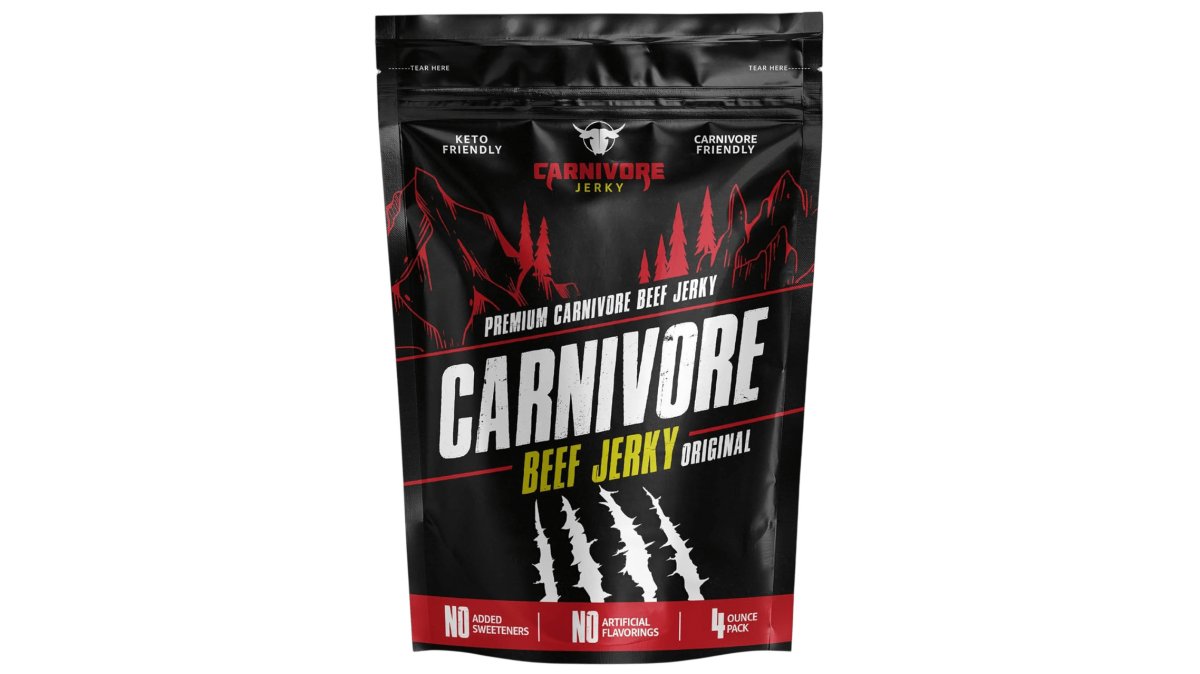
Carnivore Solutions Inc Carnivore Beef Jerky at $21.97 per package delivers approximately 40-50 grams of protein depending on package size.

The grass-fed beef jerky sticks format from Carnivore Solutions Inc ($26.97 for ten one-ounce sticks) adds portion control.
The real advantage of quality beef jerky: it removes barriers to post-workout recovery.
Post-workout recovery succeeds when protein reaches your muscles within the critical window after training.
Frequently Asked Questions
Is beef jerky good after working out?
Yes, grass-fed beef jerky is effective post-workout nutrition because it delivers high-quality protein and essential amino acids needed for muscle repair. The protein triggers muscle protein synthesis, the process your body uses to rebuild muscle fibers damaged during exercise. For best results, pair jerky with carbohydrates within 30 minutes to one hour after your workout to replenish glycogen and maximize recovery.
How much protein after a workout should you eat?
Research suggests consuming 20-40 grams of protein post-workout, depending on your body weight and workout intensity. A single serving of grass-fed beef jerky typically provides 10-15 grams of lean protein, making it a solid component of recovery nutrition. Combining jerky with a carbohydrate source (like fruit or a small portion of rice) creates a more complete recovery snack that supports both muscle repair and glycogen replenishment.
Is grass-fed beef jerky a complete protein?
Yes, grass-fed beef jerky is a complete protein containing all nine essential amino acids your muscles need for repair and growth. Grass-fed beef also offers a better omega-3 to omega-6 ratio compared to conventional beef. This makes it a strong option for post-workout recovery.
Should you eat carbohydrates with beef jerky after a workout?
Yes, pairing beef jerky with carbohydrates after exercise is highly beneficial. Carbohydrates replenish glycogen (your muscles' fuel store), while protein supports muscle repair. Together, they create optimal conditions for recovery. Aim for a 3:1 or 4:1 carbohydrate-to-protein ratio. For example, combine one ounce of jerky with a banana or small portion of rice to maximize muscle recovery and refuel your energy stores.