Organ Meat Alternatives for Carnivore Muscle Building
Table of Contents
- Why Athletes Skip Organ Meats and What Works Instead
- Carnivore Diet Muscle Building Foods Beyond Organ Meats
- Beef vs Chicken for Muscle Building on Carnivore
- Carnivore Diet Protein Intake for Muscle Growth
- Sample Carnivore Diet Meal Plan for Muscle Gain
- Nutrient Gaps Without Organ Meats: What to Monitor
- High-Protein Snacks for Muscle Recovery Between Meals
- Frequently Asked Questions
Last Updated: October 12, 2026
Why Athletes Skip Organ Meats and What Works Instead
Many athletes assume organ meats are non-negotiable for carnivore muscle building.
The good news: you don't need organ meats to build muscle on a carnivore diet. What you need is adequate protein, the right amino acid profile, and consistent training.
This guide covers the best organ meat alternatives carnivore athletes can use, practical meal strategies, and how to spot nutrient gaps if you skip organs entirely.
Carnivore Diet Muscle Building Foods Beyond Organ Meats
Muscle building on a carnivore diet hinges on sufficient protein, consistent resistance training, and adequate recovery, all achievable without liver or kidney.
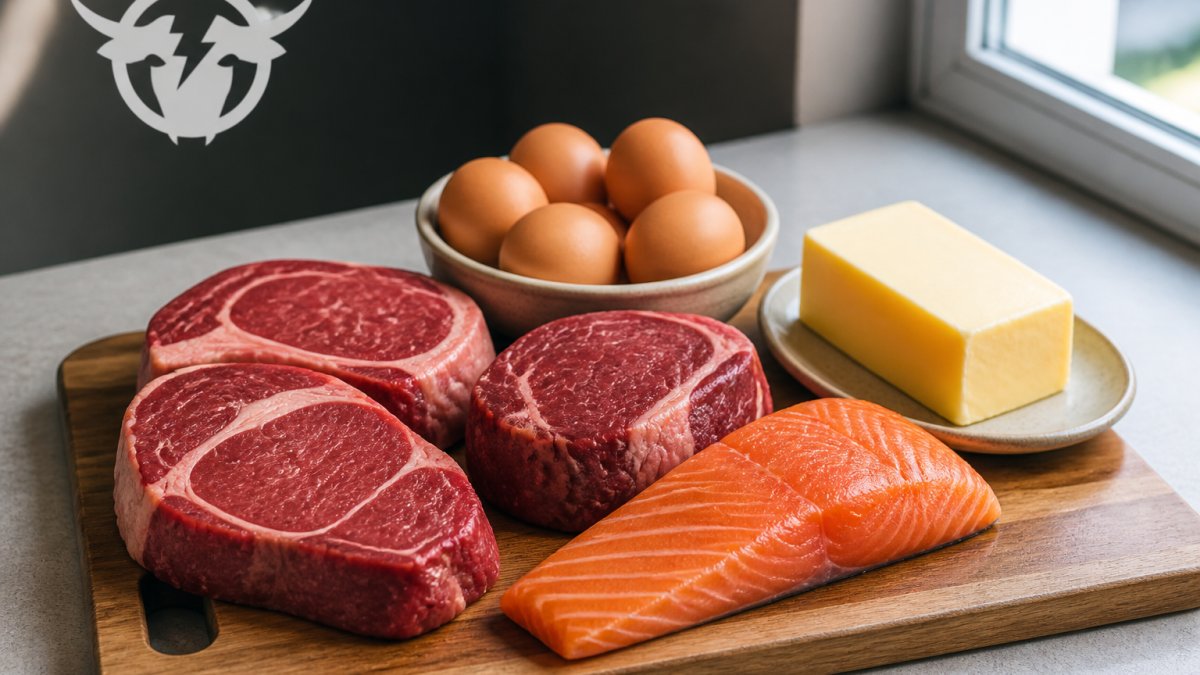
Beef as Your Primary Muscle Builder
Beef is the foundation of carnivore muscle building. It delivers complete protein with all nine essential amino acids, including leucine, which directly triggers muscle protein synthesis.
The cut matters less than total intake, ribeye, sirloin, ground beef, and chuck roast all work. Grass-fed beef offers more omega-3s and conjugated linoleic acid, but both support growth. Eat enough volume consistently.
Most athletes building muscle eat 1 to 1.5 pounds of beef daily. Fattier cuts aid satiety and hormone support; leaner cuts control calories. Both work if protein and training intensity stay consistent.
Eggs: The Portable Nutrient Powerhouse
Eggs are the second pillar of carnivore muscle building: one large egg has 6 grams of complete protein, all nine essential amino acids, choline for muscle and brain function, plus lutein and zeaxanthin.
The yolk matters: it holds most of the micronutrients and supports hormone production, making whole eggs superior to whites alone for muscle building and recovery.
Eggs are portable, need minimal prep, and cost less than most meat. Many athletes eat 3 to 6 whole eggs daily alongside beef.
Fish and Seafood for Omega-3 and Protein
Fish and seafood provide complete protein plus omega-3s that reduce inflammation and support cardiovascular health during intense training. Salmon delivers 25 grams of protein per 3.5-ounce serving plus the antioxidant astaxanthin.
Other options include mackerel, sardines, anchovies, and shellfish like oysters and clams, nutrient-dense and best rotated in 2 to 3 times weekly.
Fish is optional, beef and eggs alone suffice, but it adds micronutrient variety and supports joint health during heavy training.
Beef vs Chicken for Muscle Building on Carnivore
Chicken is leaner and cheaper than beef but lacks some of its nutrients. The useful question isn't which is better, but which delivers the most muscle-building protein per bite, and what you give up by choosing one.
Protein quantity and quality per serving
Here's how the two stack up on a raw 3.5-ounce (100 g) basis, using common USDA-style reference values:
| Food (3.5 oz / 100 g, cooked) | Protein | Calories | Fat | Leucine (approx.) |
|---|---|---|---|---|
| Ground beef, 85% lean | ~22 g | ~250 | ~17 g | ~1.7 g |
| Ribeye steak | ~24 g | ~290 | ~22 g | ~1.9 g |
| Chicken breast, skinless | ~31 g | ~165 | ~3.6 g | ~2.4 g |
| Chicken thigh, skin-on | ~25 g | ~230 | ~15 g | ~1.9 g |
Chicken breast wins on protein density and leucine per gram. Leucine most directly triggers muscle protein synthesis, and most practitioners target 2.5 to 3 g per meal. A 6-ounce chicken breast hits that easily; a 6-ounce ribeye gets close but with more than twice the calories.
What you give up by choosing chicken
Beef's advantage isn't protein, it's the co-factors that come with the protein:
- Creatine: Beef contains roughly 300-500 mg of creatine per 3.5 oz; chicken contains less, and cooking reduces both. Creatine supports strength and training volume.
- Carnosine: Beef is a stronger dietary source of carnosine, which buffers muscle acidity during high-rep work.
- Heme iron and zinc: Beef delivers more of both per serving. These minerals matter for oxygen transport and testosterone production during heavy training blocks.
- B vitamins (B12, niacin, B6): Beef is denser across the board.
Chicken isn't weak, it's leaner. For protein per calorie while cutting, chicken breast is hard to beat; for nutrient density and satiety per bite, beef wins.
Satiety, fat, and meal planning
Chicken breast is less satiating than beef due to its lower fat, so it's easier to overeat but also easier to hit high protein without exceeding calories. Athletes who run chicken as their primary protein often pair it with butter, beef tallow, or cheese for satiety and fat-soluble vitamin absorption.
Where this fits against organ meats
Organ meats like liver are micronutrient powerhouses but not meaningful muscle-building protein sources, a 3.5-oz serving of beef liver has roughly 20 g of protein but is eaten in far smaller portions, and its vitamin A load limits daily intake. Muscle meats and eggs supply your leucine and total protein; organs are a micronutrient supplement, not a protein anchor. That's the key reframe for building muscle without organs.
USDA FoodData Central for per-serving protein and amino acid values
Carnivore Diet Protein Intake for Muscle Growth
How much protein do you need? The common recommendation is 0.7 to 1 gram per pound of body weight daily, 126 to 180 grams for a 180-pound athlete.
Most people hit this naturally with 1 to 1.5 pounds of meat daily, a pound of ground beef has roughly 100 grams of protein.
Timing helps too: protein within 2 hours post-workout supports recovery, though total daily intake matters more than exact timing.
Sample Carnivore Diet Meal Plan for Muscle Gain
This plan explains why each meal is built the way it is, with a ranked list of organ-meat alternatives so you can swap without losing muscle-building value.
Ranked alternatives to organ meats for muscle building
Ranked by muscle-building usefulness (protein quality, leucine density, and training-supporting co-factors), not by micronutrient content:
- Beef (ribeye, sirloin, 85% ground), Complete protein, highest creatine and carnosine, strong leucine per serving. The default anchor.
- Eggs (whole), Complete protein, ~6 g per large egg, leucine-dense relative to calories, plus choline. Cheap and portable.
- Chicken (thigh or breast), Highest protein density per calorie; leaner, so pair with fat for satiety.
- Salmon and fatty fish, Complete protein plus omega-3s for recovery and joint health; rotate 2-3x weekly.
- Pork (shoulder, belly, chops), Complete protein, good thiamine and zinc; fattier cuts support satiety.
- Shellfish (shrimp, oysters, clams), Complete protein plus selenium, zinc, and B12; oysters are the closest muscle-meat substitute for the trace minerals organs provide.
- Hard cheese (if dairy-tolerant), Protein plus fat and calcium; useful as a snack, not a primary protein source.
Portion guidance by body weight
A practical starting point is 0.7-1 g of protein per pound of body weight per day, split across 3-4 meals so each meal clears roughly 2.5-3 g of leucine.
| Body weight | Daily protein target | Beef equivalent (approx.) | Meals per day |
|---|---|---|---|
| 150 lb | 105-150 g | 1-1.5 lb ground beef | 3 |
| 180 lb | 126-180 g | 1.25-1.75 lb | 3-4 |
| 210 lb | 147-210 g | 1.5-2 lb | 4 |
These are starting points, not prescriptions. Adjust up if you're gaining and lifts are stalling; adjust down if recovery is fine but body composition is drifting.
Training-day vs rest-day structure
On training days, front-load protein earlier and keep a leucine-rich meal within a couple of hours after your session. On rest days, you can drop total volume slightly and lean on fattier cuts for satiety.
Training day (180-lb athlete, ~175 g protein):
- Breakfast: 4 whole eggs fried in butter, ~24 g protein, ~1.6 g leucine
- Lunch: 8 oz 85% ground beef with salt, ~56 g protein, ~4 g leucine
- Pre/post-training snack: 2 beef jerky sticks, ~12 g protein
- Dinner: 10 oz ribeye, ~70 g protein, ~5 g leucine
- Total: ~162 g protein, comfortably above the 2.5 g leucine threshold at every whole-food meal
Rest day (same athlete, ~150 g protein):

- Breakfast: 3 whole eggs + 2 oz hard cheese, ~24 g protein
- Lunch: 8 oz chicken thigh with tallow, ~50 g protein
- Dinner: 8 oz salmon, ~57 g protein
- Total: ~131 g protein, with omega-3s supporting recovery
| Meal | Protein (g) | Key nutrients | Prep time |
|---|---|---|---|
| 4 whole eggs | 24 | Choline, complete amino acids | 5 min |
| 8 oz ground beef | 56 | Creatine, B vitamins, iron, zinc | 10 min |
| Beef jerky sticks | 12 | Portable protein, electrolytes | Ready-to-eat |
| 10 oz ribeye | 70 | Complete protein, fat-soluble vitamins | 15 min |
Why this beats a generic plan
Most carnivore meal plans stop at "eat meat and eggs." This one ties every meal to a leucine threshold, a protein-per-pound target, and a training/rest-day split, the three variables that drive muscle gain, and ranks alternatives so swaps don't cost you protein or amino-acid targets.
Nutrient Gaps Without Organ Meats: What to Monitor
Skipping organ meats means losing concentrated sources of certain micronutrients. What to watch:
Vitamin A: Liver is exceptionally high in preformed vitamin A; muscle meat and eggs contain less. Daily beef and eggs likely cover you, but monitor it, grass-fed beef has more than grain-fed.
Copper and Selenium: Organs provide more of these trace minerals than muscle meat; seafood and eggs fill the gap, so rotate fish in 2 to 3 times weekly.
Iron: Red meat is iron-rich, though organs contain more. Consistent beef intake covers most people; if you're fatigued despite good sleep and training, check iron levels.
Folate: Organs are a folate source and muscle meat has less, though this is rarely an issue if you eat adequate beef.
The takeaway: a variety of muscle meat, eggs, and seafood covers most micronutrient needs.
High-Protein Snacks for Muscle Recovery Between Meals
Between-meal snacking supports recovery and stable energy during training. Practical carnivore options:
Beef jerky: Convenient, portable, and protein-dense. Carnivore Solutions Inc offers grass-fed beef jerky made with only three ingredients: grass-fed beef, bone broth, and sea salt, no fillers or artificial additives, and clean protein without the digestive load of whole meals.
Hard-boiled eggs: Prepare a batch weekly. Two eggs provide 12 grams of protein and travel well.
Beef sticks: Carnivore Beef Jerky Sticks from Carnivore Solutions Inc offer 1-ounce portions for easy tracking, made with the same three-ingredient philosophy.

Canned fish: Salmon or mackerel in water or oil, shelf-stable, no prep.
Cheese: If you tolerate dairy, hard cheeses provide protein and fat for satiety.
The best snack is one you'll actually eat.
Building muscle on a carnivore diet without organ meats is entirely possible.
If you're struggling with energy or recovery, consider adding electrolyte support.
Frequently Asked Questions
Can you build muscle on a carnivore diet without eating organ meats?
Yes. Muscle growth depends on total protein intake, amino-acid profile, and training stimulus, not organ-meat consumption. Beef, eggs, fish, and poultry deliver complete amino acids and leucine needed for muscle protein synthesis. Many carnivore athletes skip organs entirely and maintain strength gains. The key is hitting your protein target (0.7-1 gram per pound of bodyweight) and ensuring adequate calories and recovery.
What's the best organ meat alternative for muscle building?
Beef is the most practical alternative. It provides 25-27 grams of protein per 3.5-ounce serving, contains all essential amino acids, and delivers creatine naturally. Eggs are second: one large egg has 6 grams of protein and choline for muscle recovery. Fish like salmon adds omega-3 fatty acids alongside protein. For carnivore athletes avoiding organs, rotating between these three covers nutrient density without the palatability issues organs present.
How much protein do you need daily to build muscle on carnivore?
Aim for 0.7-1 gram of protein per pound of bodyweight. A 180-pound athlete needs 126-180 grams daily. On carnivore, this typically means 6-8 ounces of beef per meal, plus eggs or fish. Distribute protein across 2-3 meals to optimize muscle protein synthesis. Research shows protein timing matters less than total daily intake, so consistency beats perfect meal spacing.
Do you need supplements if you're not eating organ meats on carnivore?
Most nutrients come from whole carnivore foods when you eat nose-to-tail muscle meat, eggs, and fish. However, electrolyte supplementation supports hydration and performance, especially during intense training. Bone broth and beef-based snacks like grass-fed jerky infused with bone broth provide collagen and minerals. Electrolyte powders without sugar or artificial sweeteners help replace sodium, potassium, and magnesium lost during workouts.