Supplements Needed for Carnivore Diet: Complete Guide
Table of Contents
- Do You Actually Need Supplements on a Carnivore Diet?
- Carnivore Diet Electrolyte Requirements and Why They Matter
- Micronutrients Beyond Meat: What Whole Foods Can't Provide Alone
- Signs of Nutrient Deficiency on Carnivore Diet
- How to Transition to a Carnivore Diet Safely
- Building Your Carnivore Supplement Stack: A Practical Framework
- Bioavailability Matters: Synthetic vs. Whole-Food Sources
- Frequently Asked Questions
Do You Actually Need Supplements on a Carnivore Diet?
The carnivore diet creates specific metabolic demands that whole foods alone may not fully address, especially during transition. While meat is nutrient-dense, the first 4-8 weeks demand different nutritional support than month six and beyond. At Carnivore Solutions Inc, your body's adaptation to ketosis, electrolyte losses from reduced carbohydrate intake, and emerging micronutrient gaps are predictable challenges that supplementation can solve cleanly.
The real question isn't whether you need supplements. It's which ones matter most, when they matter, and which ones you can skip without consequence.
Carnivore Diet Electrolyte Requirements and Why They Matter
Electrolyte imbalance is the single most common reason people abandon carnivore diets. When you eliminate carbohydrates, your kidneys shift from retaining sodium to excreting it aggressively (peer-reviewed research). Simultaneously, reduced processed foods mean your sodium intake drops sharply. This creates a genuine electrolyte deficit manifesting as muscle cramps, fatigue, headaches, and heart palpitations.

Sodium, Potassium, and Magnesium: The Core Three
Sodium is not the villain it's been marketed as. On carnivore, you need more sodium than standard diet recommendations suggest. Adding 3,000-5,000 mg of sodium daily through food and supplementation eliminates adaptation symptoms within days (peer-reviewed research). Beef contains sodium, but not in quantities sufficient for someone in ketosis.
Potassium deficiency on carnivore is subtle but consequential, muscle weakness, irregular heartbeat, and fatigue creep in gradually. Organ meats contain potassium, but most people don't eat enough regularly. If you're below 3,500 mg daily, supplementation becomes relevant.
Magnesium is where most carnivores fall short without intervention. Beef contains modest amounts, but the mineral supports muscle function, sleep quality, and metabolic processes that ketosis demands. Preventive supplementation at 300-400 mg daily (divided into two doses) prevents problems entirely.
Calcium and Trace Minerals
Calcium often gets overlooked because meat does contain it, just not in large quantities. If you're eating organ meats regularly, you're likely getting adequate calcium. If not, 500-800 mg daily becomes relevant, particularly for women and older adults.
Trace minerals like zinc, iron, and copper are abundant in organ meats and beef. If you're eating nose-to-tail, you're probably covered. If you're eating muscle meat exclusively, a broad-spectrum mineral supplement becomes practical insurance.
Micronutrients Beyond Meat: What Whole Foods Can't Provide Alone
Meat is extraordinarily nutrient-dense, but the carnivore diet creates specific gaps that whole food alone struggles to fill.
Vitamin D3 for Indoor Lifestyles
Vitamin D is synthesized by your skin in response to sunlight (the NIH). If you live north of the 35th parallel, work indoors, or have limited sun exposure during winter, your vitamin D synthesis drops dramatically.
Grass-fed beef contains some vitamin D, but not in quantities sufficient for someone with limited sun exposure. A practical dose is 2,000-4,000 IU daily, adjusted based on blood work.
Omega-3 Fatty Acids and Inflammation Management
The omega-3 to omega-6 ratio in beef is better than in most processed foods, but not optimal. Even grass-fed beef contains more omega-6 than omega-3. For someone eating beef as their primary protein source, this imbalance compounds over time.
Omega-3 supplementation addresses this directly. A dose of 1,000-2,000 mg of combined EPA and DHA daily helps manage inflammation markers and supports cardiovascular health.
Organ Meats vs. Synthetic Supplements
Organ meats, liver, kidney, heart, bone marrow, contain concentrated micronutrients that muscle meat doesn't match. A quarter-pound of liver delivers more bioavailable nutrients than most supplement bottles. The problem is consistency. Most people don't eat organ meats regularly enough to rely on them as their primary micronutrient source.
Synthetic supplements offer consistency and convenience. They're not inferior to whole-food sources in bioavailability; they're different. The practical answer: use organ meats as your foundation and fill gaps with targeted supplementation.
Signs of Nutrient Deficiency on Carnivore Diet
Deficiency symptoms develop gradually, making them easy to miss. Fatigue that worsens over weeks, muscle cramps during workouts, sleep disruption, or mood changes are red flags. Hair loss, brittle nails, or persistent infections suggest deeper micronutrient gaps. The most reliable approach is objective testing through blood work, the only method that reveals your actual nutritional status before symptoms force intervention.
Blood Markers to Track Before Starting Carnivore
A baseline blood panel before transitioning to carnivore establishes your starting point. Request these specific markers:
Essential markers:
- Vitamin D (25-hydroxyvitamin D): Optimal range is 40-60 ng/mL. Most people in northern climates start below 30 ng/mL.
- Iron panel (serum ferritin, serum iron, TIBC): Carnivore is iron-rich; baseline ferritin helps you avoid both deficiency and excess accumulation.
- Vitamin B12 and folate: Meat contains B12 but not folate. Baseline levels guide whether supplementation is needed.
- Electrolytes (sodium, potassium, chloride): Establishes your pre-carnivore baseline before kidney shifts to sodium excretion.
- Magnesium (RBC magnesium preferred): RBC magnesium is more accurate than serum magnesium.
- Inflammatory markers (CRP, ESR): Carnivore often reduces inflammation; baseline measurement confirms the effect.
- Lipid panel and glucose: Establishes metabolic baseline; many people see improvements in triglycerides and fasting glucose on carnivore.
Follow-Up Testing: The 8-12 Week Mark
A second blood panel 8-12 weeks into carnivore reveals what's shifting and what requires intervention.
What typically improves without intervention:
- Fasting glucose often drops 10-20 mg/dL within 4-8 weeks.
- Triglycerides frequently decline 20-40%.
- Inflammatory markers (CRP) often decrease measurably.
- Blood pressure typically improves.
What often requires supplementation:
- Vitamin D remains low if sun exposure is limited, confirming the need for D3 supplementation.
- Magnesium may decline if electrolyte replacement is inadequate.
- Omega-3 index often reveals omega-6 dominance of beef-only diets, guiding fish oil dosing.
- Iron may rise slightly, which is normal, but ferritin trends help you monitor accumulation.
Long-Term Monitoring: Every 6-12 Months
Once you've optimized your supplement stack based on initial testing, ongoing monitoring every 6-12 months catches slow-moving deficiencies before symptoms emerge. Blood work transforms supplementation from guesswork into precision.
How to Transition to a Carnivore Diet Safely
The Adaptation Phase: What to Expect
The first 4-8 weeks are metabolically demanding. Your body shifts from glucose to fat metabolism. Electrolyte losses spike. Energy fluctuates. This is when supplementation matters most.
During adaptation, aggressive electrolyte replacement prevents the worst symptoms.
Blood Work and Objective Testing
A complete metabolic panel before starting carnivore gives you baseline markers. A follow-up test at 8-12 weeks reveals what's shifting. The data guides your supplementation decisions far better than guessing based on how you feel.
Building Your Carnivore Supplement Stack: A Practical Framework
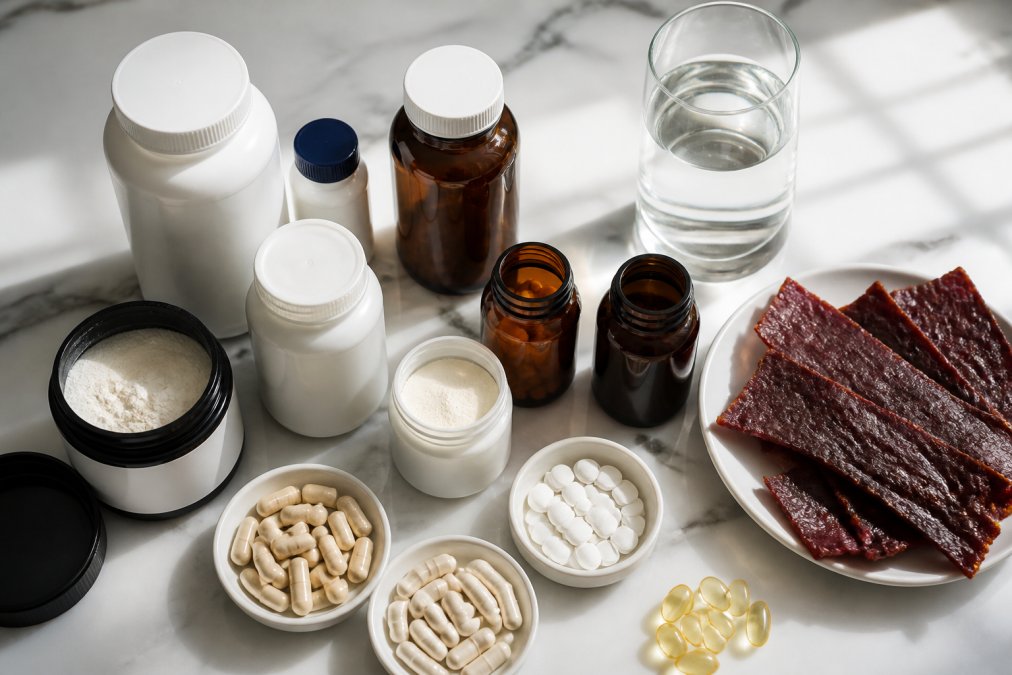
Supplementation works best when tiered. Not everything matters equally, and not everything matters immediately.
Tier 1: Non-Negotiable Supplements
-
Electrolyte powder: Sodium, potassium, and magnesium in balanced ratios. Carnivore Solutions Inc formulates electrolyte powders with zero sugar and zero fillers, designed specifically for carnivore adaptation. Most people need this for at least the first 8-12 weeks; many continue indefinitely.
-
Magnesium supplement: A separate magnesium dose beyond what's in electrolyte powder. Glycinate or threonate forms absorb more efficiently than oxide. A dose of 300-400 mg, split between morning and evening, supports sleep and muscle function.
-
Vitamin D3: 2,000-4,000 IU daily if you have limited sun exposure. Blood work confirms whether your dose is adequate.
Tier 2: Conditional Supplements Based on Your Situation
-
Omega-3 supplement: If you're not eating fatty fish or if your omega-3 index is below 8%. A dose of 1,000-2,000 mg daily of combined EPA and DHA.
-
Organ meat capsules: If you're not eating liver, kidney, or other organs regularly, freeze-dried organ meat capsules provide concentrated micronutrients and address multiple nutrient gaps simultaneously.
-
Calcium supplement: Only if blood work shows low levels or if you're not eating organ meats.
Tier 3: Optimization Supplements for Long-Term Metabolic Health
-
Collagen peptides: Support joint health, skin quality, and gut integrity. A dose of 10-20 grams daily.
-
Digestive enzymes: If experiencing digestive discomfort during transition. Most people phase them out after 4-8 weeks.
-
Antioxidant support: Polyphenol-rich supplements address oxidative stress that can accumulate on high-fat diets. This is longer-term optimization, not immediate necessity.
Bioavailability Matters: Synthetic vs. Whole-Food Sources
Synthetic vitamins are not inherently inferior, many are chemically identical to food-derived counterparts and absorbed equally well. However, bioavailability depends on absorption context, cofactors, and nutrient form. On carnivore, where you're eliminating plant foods that normally provide absorption helpers, this distinction becomes more consequential.
How Synthetic Vitamins Are Absorbed
Synthetic vitamin D3 is absorbed identically whether from supplement or fish oil, your intestines don't distinguish between sources. The same is true for synthetic magnesium glycinate or omega-3 ethyl esters. Chemical structure matters for absorption, not origin.
However, synthetic supplements often lack cofactors that enhance absorption. Vitamin D is fat-soluble and absorbs better with dietary fat. A synthetic D3 capsule taken with beef absorbs well; taken on an empty stomach, absorption drops. Synthetic magnesium oxide has poor bioavailability (4-5% absorption), while magnesium glycinate absorbs at 80-90%. The form matters more than whether it's synthetic.
Why Freeze-Dried Organ Supplements Outperform Single-Nutrient Synthetics
Freeze-dried organ meat capsules represent a different category. They're whole-food sources, but concentrated. A single capsule of freeze-dried liver contains iron, copper, selenium, and B vitamins in ratios that support each other's absorption.
Iron absorption requires copper and vitamin C. Freeze-dried liver provides all three. Synthetic iron supplements often cause constipation and poor absorption unless paired with vitamin C supplementation. Freeze-dried liver avoids this problem because nutrients arrive in their natural context.
Freeze-dried organ supplements also contain choline and carnitine, compounds synthetic supplements don't include. A person taking synthetic iron, copper, and B vitamins separately may absorb 30-50% of the iron. A person taking freeze-dried liver capsules absorbs 70-85% because cofactors are present.
Synthetic Supplements Excel in Specific Contexts
Electrolyte powders must be synthetic. You cannot get 3,000-5,000 mg of sodium and 2,000-3,500 mg of potassium from freeze-dried food in a single serving.
Vitamin D3 supplementation works equally well from synthetic or whole-food sources. If taken with a meal containing fat, absorption is equivalent.
Omega-3 supplementation is practical as synthetic because you'd need 4-6 ounces of fatty fish daily to match a 2,000 mg EPA/DHA dose.
The Hybrid Approach: Maximizing Bioavailability
The optimal strategy combines both:
-
Tier 1 (electrolytes, vitamin D, omega-3): Use targeted synthetic supplements. Bioavailability is well-established and practical.
-
Tier 2 (micronutrient gaps): Use freeze-dried organ meat capsules as your primary source. They address multiple nutrient gaps simultaneously and provide cofactors that enhance absorption.
-
Tier 3 (optimization): Use whole-food sources where practical and synthetic supplements where whole-food dosing is impractical.
Testing Your Absorption: Omega-3 Index and Iron Stores
Bioavailability is measurable. An omega-3 index blood test reveals whether your fish oil supplementation is raising your tissue levels. Serum ferritin and iron levels after 8-12 weeks show whether your iron absorption is adequate. If you're supplementing but ferritin remains low, absorption is the problem, switching to freeze-dried liver often resolves it.
Synthetic and whole-food supplements serve different purposes. Synthetic supplements are efficient for specific gaps. Whole-food supplements like freeze-dried organs excel at providing multiple nutrients in an absorption-optimized context. Neither is universally superior; the distinction is functional.
Frequently Asked Questions
Q: Do I really need to take supplements on a carnivore diet?
A: It depends on your situation. If you eat nose-to-tail with organ meats and maintain consistent electrolyte intake through bone broth and salt, you may cover most bases. However, most people benefit from electrolyte supplementation during the adaptation phase and vitamin D3 if you spend limited time outdoors. Blood work is the objective way to know, testing reveals deficiencies that aren't obvious from symptoms alone.
Q: What are the signs of nutrient deficiency on a carnivore diet?
A: Watch for muscle cramps, fatigue, brain fog, and irregular heartbeat, these often signal electrolyte imbalance. Hair loss, brittle nails, and slow wound healing can indicate micronutrient gaps. Persistent fatigue despite adequate sleep may suggest vitamin D deficiency or insufficient omega-3 intake. The safest approach is blood work testing for magnesium, potassium, vitamin D, and folate levels rather than guessing based on symptoms.
Q: What electrolytes do I need on a carnivore diet?
A: Sodium, potassium, and magnesium are the critical three. Most carnivores need more sodium than they expect, your body doesn't retain it as efficiently in ketosis. Magnesium supports muscle function and prevents cramps, while potassium maintains the sodium-potassium balance. Calcium and trace minerals matter too, but these three form the foundation. A quality electrolyte powder with all five minerals covers your bases without guessing.
Q: How do I transition to a carnivore diet safely?
A: Start by replacing processed foods with meat while keeping your current diet structure, then gradually reduce plant foods over 2-4 weeks. Expect an adaptation phase with potential fatigue, headaches, and muscle cramps as your body shifts to ketosis, this is normal. Prioritize electrolyte intake immediately to minimize symptoms. Track energy and digestion; if you experience persistent fatigue after two weeks, add organ meats or consider digestive enzyme support. Blood work at 4-6 weeks helps confirm you're not developing deficiencies.
Q: Is vitamin D necessary if I'm on a carnivore diet?
A: Yes, especially if you spend most of your day indoors or live in northern climates with limited winter sun exposure. Meat doesn't provide meaningful vitamin D3, and deficiency impairs immune function, bone health, and mood. A maintenance dose of 2,000-4,000 IU daily is reasonable for most people; blood testing (25-hydroxyvitamin D) shows whether you need more. Pair vitamin D3 with vitamin K2 from grass-fed sources or supplements for proper calcium metabolism.
Q: Can I get all my vitamins from meat alone?
A: Meat is nutrient-dense, but it has gaps. Organ meats fill many of them, liver provides folate and vitamin A, heart supplies CoQ10, and bone marrow offers minerals. However, vitamin D comes only from sun exposure or supplements; meat lacks meaningful amounts. Omega-3 to omega-6 ratios in grain-fed meat are poor, so wild-caught fish or supplementation helps manage inflammation. Whole-food sources are superior when available, but strategic supplementation addresses what meat alone cannot provide.
Q: Should I use synthetic vitamins or whole-food supplements?
A: Bioavailability varies. Synthetic vitamins like D3 are well-absorbed and cost-effective; whole-food sources like freeze-dried organ powders offer cofactors that enhance absorption. For electrolytes, the form matters less than the mineral content and absence of fillers. Organ meats beat synthetic supplements when available and affordable. For convenience and consistency, quality whole-food powders without additives bridge the gap. Test your response: if symptoms improve, your choice is working.
Q: How does supplement timing affect ketosis and metabolism?
A: Electrolytes don't disrupt ketosis, they're minerals, not carbs. Taking them with food or alone makes no metabolic difference. Timing matters for absorption and symptom relief: electrolytes before or during workouts prevent cramps and fatigue. Fat-soluble vitamins like D3 and K2 absorb better with fat, so take them with a meal. Digestive enzymes help during the transition phase when your gut adapts to a meat-only diet. Consistency matters more than perfect timing.