10 Carnivore Meal Plan Ideas for Busy People
Table of Contents
- Why Carnivore Meal Planning Works for Busy Schedules
- Carnivore Diet Meal Prep Tips That Save Time
- 10 Carnivore Meal Plan Ideas That Fit Your Week
- Easy Carnivore Snacks for Work and Travel
- Supplements Needed for Carnivore Diet Success
- Budget-Friendly Carnivore Meal Planning
- Frequently Asked Questions
Last Updated: September 20, 2026
Why Carnivore Meal Planning Works for Busy Schedules
The 10 carnivore diet meal plan ideas for busy people share one critical advantage: simplicity. When your diet consists of animal-based foods, meal planning becomes straightforward because you're not juggling dozens of ingredients or complex recipes. This is where carnivore meal planning differs from conventional dieting, you eliminate the decision fatigue that derails most people.
Busy professionals often abandon diet plans because they require too much mental overhead. Carnivore diets strip that away. You're not counting macros obsessively or searching for hidden carbs. You buy meat, cook it, and eat it. This simplicity translates into consistency; people stick with carnivore because the friction is low, not because willpower is high.
The real payoff comes from batch cooking and prep work. When you dedicate a few hours on Sunday to preparing nutrient-dense proteins and stocking your fridge, the rest of your week runs on autopilot. You grab pre-cooked steak, hard-boiled eggs, or beef jerky. No morning scramble, no afternoon hunger crashes, no reaching for processed snacks.

Carnivore Diet Meal Prep Tips That Save Time
Meal prep is the backbone of any sustainable eating plan, but carnivore prep is faster than most alternatives. You're not steaming vegetables, measuring grains, or balancing complex plates. You're cooking meat and storing it.
Batch Cooking Ground Beef and Steak
Ground beef is your efficiency tool. A single batch, five to ten pounds cooked in a large skillet or slow cooker, yields multiple meals across your week. Season it simply: salt, pepper, and high heat. Brown it thoroughly, then portion it into containers. Ground beef keeps refrigerated for four to five days, making it ideal for Monday-through-Friday meal prep.
Steak requires slightly different handling. Cook thick cuts (ribeye, NY strip, sirloin) in a cast iron skillet over medium-high heat. Sear each side for three to four minutes, then rest the meat for five minutes before slicing. Steak holds its texture better than ground beef when reheated, and the higher fat content keeps it moist even after a few days in the fridge.
For those following a carnivore meal plan, batch-cooked ground beef becomes the foundation. Cook it once, use it three different ways: plain with salt, mixed into eggs for breakfast, or paired with bone broth for a simple broth-based meal. This approach cuts prep time dramatically while maintaining nutritional density.
Slow Cooker and Air Fryer Shortcuts
The slow cooker transforms tougher, cheaper cuts into tender meals with zero active work. Place a three-pound chuck roast in the slow cooker with salt and water, set it to low, and return eight hours later to perfectly cooked, shred-able meat. This approach reduces your actual hands-on time to five minutes while producing enough protein for four to six meals.
Air fryers are the speed alternative. Bacon cooks in eight minutes without the splatter. Chicken thighs, a nutrient-dense carnivore staple, reach perfect doneness in twelve minutes. Ground beef patties cook in ten minutes. The air fryer excels when you need a meal ready in under twenty minutes total.
For busy schedules, the combination matters. Use the slow cooker for Sunday prep when you have time to let it run. Use the air fryer for weeknight meals when you need speed. Both methods require minimal monitoring and produce consistent results, which is what matters for adherence to a carnivore meal plan.
10 Carnivore Meal Plan Ideas That Fit Your Week
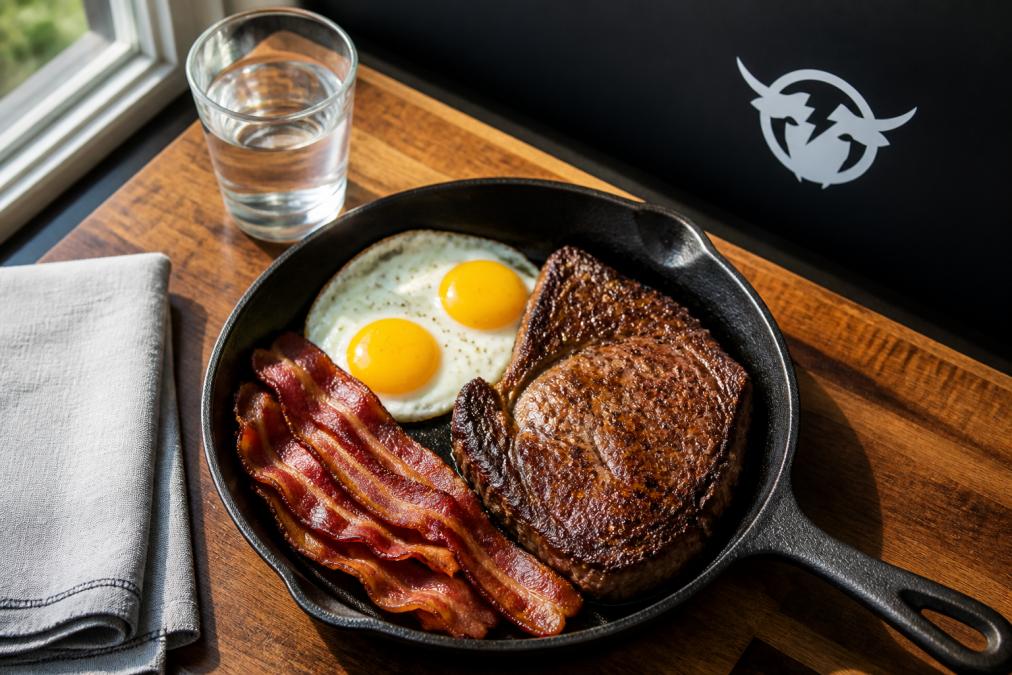
These ten carnivore meal plan ideas cover breakfast, lunch, dinner, and snacks. Each fits a busy schedule because none requires more than twenty minutes of active preparation, and most use batch-cooked proteins you've already prepared.
Steak and Eggs Breakfast Variations
Steak and eggs is the foundational carnivore breakfast, protein-rich, satisfying, and quick. Cook a ribeye or sirloin steak in butter over medium-high heat for four minutes per side. While the steak rests, fry two to three eggs in the same pan to capture the meat drippings. This single meal delivers sustained energy through the morning.
Variation one: Add bacon. Cook three to four strips until crispy, then crumble over the eggs and steak. Variation two: Use ground beef instead of steak. Brown two to three ounces of grass-fed ground beef, then top with fried eggs. Variation three: Make a steak and egg scramble by dicing the cooked steak, mixing it with scrambled eggs and butter, and seasoning aggressively with salt.
These variations take eight to twelve minutes total. Prep time shrinks to three minutes if you use batch-cooked steak from Sunday. For busy mornings, this is the difference between eating a proper meal and skipping breakfast entirely.
Ground Beef Lunch Options
Ground beef lunches offer portability and satiety. Option one: plain cooked ground beef with salt and a glass of water. This sounds austere, but the simplicity works. You're eating nutrient-dense protein without distraction. Option two: ground beef with hard-boiled eggs. Cook the beef in advance, then grab pre-cooked eggs from your fridge. Combine them in a container, and you have a complete meal.
Option three: ground beef patties. Form cooked ground beef into patties, refrigerate them, and grab one or two for lunch. Eat them cold or reheat briefly. Option four: ground beef with bone broth. Heat a portion of batch-cooked ground beef in bone broth for a simple, warming meal that supports electrolyte balance and hydration.
For professionals eating at desks or during commutes, ground beef is superior to steak because it doesn't require cutting and is less messy to eat.
Seafood and Organ Meat Dinners
Seafood adds variety to a carnivore meal plan while delivering unique micronutrients. Salmon fillets cook in a skillet in eight minutes and provide omega-3 fatty acids. Canned sardines or mackerel offer convenience, no cooking required, just open and eat. Ground fish or fish patties work similarly to ground beef, offering a different flavor profile without additional prep complexity.
Easy Carnivore Snacks for Work and Travel
Snacking on a carnivore diet means reaching for protein-rich, portable options that don't require refrigeration or cooking. Beef jerky is the obvious choice, grab a stick and eat it between meetings or during a commute. Hard-boiled eggs are equally portable and require only that you cook them once per week.
Supplements Needed for Carnivore Diet Success
A strict carnivore diet covers most micronutrients through nose-to-tail eating, but electrolytes deserve special attention. When you eliminate plant foods, you lose a primary source of potassium and magnesium. Sodium intake often drops as well because you're not salting processed foods. This creates an electrolyte deficit that manifests as fatigue, muscle cramps, or headaches.
Budget-Friendly Carnivore Meal Planning
Carnivore eating doesn't require expensive grass-fed ribeyes every night. Ground beef, the most affordable protein source, forms the foundation of budget carnivore meal planning. Buy it in bulk when it's on sale, portion it into two-pound increments, and freeze it. A single batch of ground beef costs less than ten dollars and yields five to seven meals.
| Meal Component | Budget Option | Cost Per Serving | Prep Time |
|---|---|---|---|
| Protein base | Ground beef | $1.50-2.00 | 10 minutes |
| Breakfast | Eggs + bacon | $1.00-1.50 | 8 minutes |
| Lunch | Canned fish | $0.75-1.25 | 2 minutes |
| Snack | Hard-boiled eggs | $0.25-0.50 | Batch prep |
| Electrolytes | Unflavored powder | $0.48/serving | 1 minute |
Frequently Asked Questions
What is a good daily carnivore meal plan for someone with a busy schedule?
A practical daily carnivore meal plan for busy people centers on protein-rich, nutrient-dense foods that require minimal prep. Start with steak and eggs for breakfast, ground beef or leftover protein for lunch, and seafood or organ meats for dinner. Batch cook proteins on weekends and portion them into containers. Include easy snacks like beef jerky sticks and bone broth. This approach eliminates decision fatigue and keeps meals simple: animal-based protein, salt, and water. Most busy professionals find success with a repeating 3-4 day rotation to reduce planning complexity.
Can you meal prep for the carnivore diet, and what's the best approach?
Yes, carnivore diet meal prep is straightforward and highly effective for busy schedules. Cook ground beef, steak, or seafood in bulk using a slow cooker or air fryer, then portion into containers for the week. Prepare hard-boiled eggs in batches. Store bone broth separately for hydration and collagen intake. The key advantage: carnivore proteins stay fresh longer than plant-based meals because they lack carbohydrates that spoil quickly. Prep on Sunday for Monday-Friday meals, or split prep into two sessions. Keep it simple with 2-3 protein sources per week to maintain consistency and reduce cooking time.
What supplements are actually needed on a carnivore diet?
The primary supplement needed for carnivore diet success is electrolytes, particularly sodium, potassium, and magnesium. Many people transitioning to carnivore experience fatigue or muscle cramps due to electrolyte shifts. Bone broth provides collagen and micronutrients naturally, but electrolyte powder ensures balanced hydration during workouts and fasting. Grass-fed beef and organ meats supply most micronutrients, but electrolyte supplementation prevents performance drops. The Unflavored Electrolytes Powder ($42.97) delivers all five key electrolytes without sugar or fillers, supporting daily energy, recovery, and sustained performance on a zero-carb diet.
How do I maintain satiety and sustained energy through a busy workday on carnivore?
Satiety on carnivore comes from protein and fat density. Eat protein-rich meals with adequate fat (ribeye steak, ground beef with fat, salmon) to stay full for 5-6 hours. Pair meals with electrolyte hydration to prevent energy crashes. Portable snacks like beef jerky sticks ($26.97 for 10 sticks) bridge gaps between meals and provide sustained energy without blood sugar spikes. Hard-boiled eggs and canned fish work well for desk snacking. The combination of nutrient-dense animal-based foods and proper hydration eliminates afternoon crashes common on high-carb diets, allowing you to maintain focus and performance throughout your workday.