How to Spot Hidden Sugars in Snacks: 2026 Guide
Table of Contents
- Why 'No Added Sugar' Doesn't Mean What You Think
- Step 1: Learn the Common Names for Added Sugar
- Step 2: Decode the Ingredients List Like a Label Detective
- Step 3: Spot Hidden Sugars in Savory Snacks
- Why Artificial Sweeteners Cause Bloating (and What to Do Instead)
- Step 4: Use the Sugar-to-Gram Conversion Cheat Sheet
- Step 5: Swap Hidden-Sugar Snacks for Clean Alternatives
- Frequently Asked Questions
Last Updated: September 10, 2026
Why 'No Added Sugar' Doesn't Mean What You Think
Learning how to spot hidden sugars in snacks starts with understanding that "no added sugar" is a marketing promise, not a nutritional guarantee. Food manufacturers can legally make this claim while packing a product with naturally occurring sugars or sugar alcohols that still affect your body. This guide breaks down the exact label-reading skills you need to catch what brands try to hide.
Here's the uncomfortable truth: the FDA allows "no added sugar" on labels even when a product contains concentrated fruit juice, which functions identically to added sugar in your body. That single loophole explains why so many snacks marketed as healthy still spike your blood glucose.
The FDA Loophole That Lets Snack Brands Mislead You
The FDA defines "added sugars" as sugars added during processing, but this definition excludes naturally occurring sugars in fruit and dairy. A snack bar sweetened with date paste or concentrated fruit juice can claim "no added sugar" because those ingredients technically occur naturally. Your body processes them the same way it processes table sugar.
How to Read Nutrition Facts Labels for Added Sugars
The nutrition facts label now requires a dedicated "Added Sugars" line. Check this number first. If it reads zero but the product tastes sweet, scan the ingredients list for fruit juice concentrates, syrups, or anything ending in "-ose." According to the FDA's added sugars guidance, Americans consume far more added sugar than recommended, largely because it hides in processed foods people assume are healthy.
Step 1: Learn the Common Names for Added Sugar
The fastest way to catch hidden sugars is memorizing their aliases. Manufacturers use dozens of names specifically because most shoppers only look for "sugar" on the label.
Here are the common names for added sugar you'll encounter most often:
- High-fructose corn syrup - the most prevalent sweetener in processed snacks
- Cane juice crystals - sounds natural, functions like white sugar
- Concentrated fruit juice - legally "natural" but metabolically identical to added sugar
- Dextrose, maltose, sucrose - all simple sugars with different names
- Syrup - any variation (rice syrup, corn syrup, tapioca syrup) is sugar
The '-ose' Suffix Rule and Other Red Flags
Any ingredient ending in "-ose" is a sugar. Fructose, glucose, sucrose, maltose, dextrose: all sugars. This rule catches most offenders instantly. Watch also for ingredients ending in "-ol" (sugar alcohols like maltitol and sorbitol), which can cause digestive issues, and anything with "syrup" or "juice concentrate" in the name.
When 'Healthy' Buzzwords Hide Sugar
Terms like "natural," "wholesome," and "made with real fruit" tell you nothing about sugar content. A snack can be 100% natural and still deliver 20 grams of sugar per serving. The ingredients list never lies, even when the front of the package does.
Step 2: Decode the Ingredients List Like a Label Detective
Ingredients are listed by weight, from most to least. This matters enormously for spotting hidden sugars.
If sugar appears in any form within the first three ingredients, the product is primarily sugar by weight. But here's where it gets tricky: manufacturers split sugar across multiple ingredients so no single one dominates the list. You might see "cane sugar, brown rice syrup, and fruit juice concentrate" as ingredients four, five, and six. Combined, they outweigh everything else.
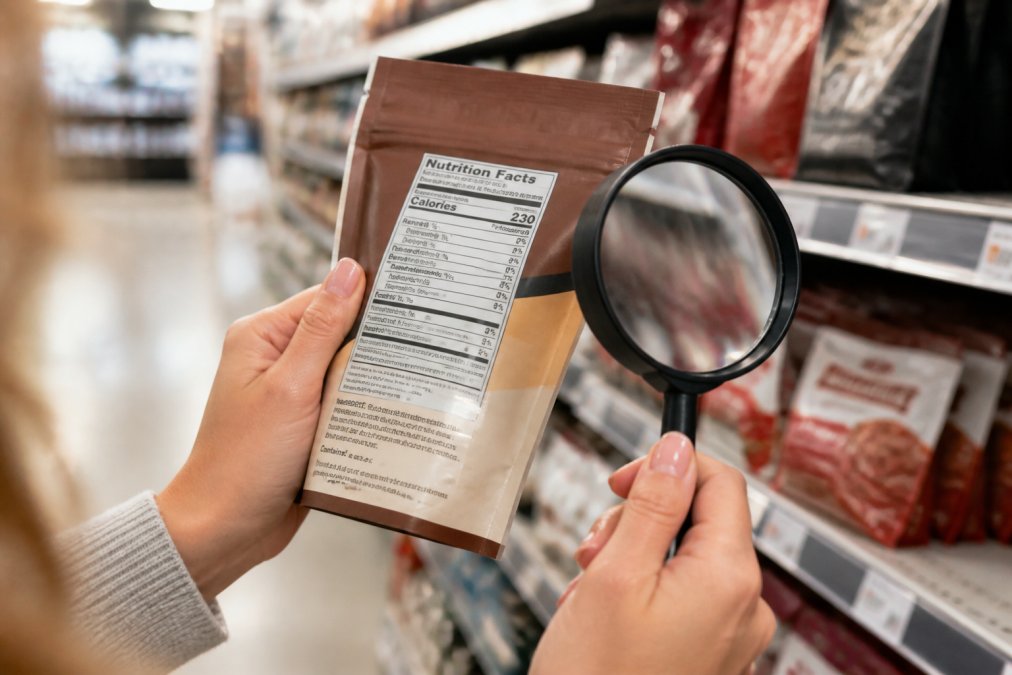
Count every sugar alias. If three or more appear anywhere in the list, treat the product as sugar-heavy regardless of what the front label claims.
Step 3: Spot Hidden Sugars in Savory Snacks
Savory snacks are the last place most people expect sugar, which makes them the perfect hiding spot. Processed foods marketed as salty or spicy frequently contain added sugars for flavor balancing, browning, or texture.
Check these common offenders:
- Barbecue and teriyaki chips - sugar is often the second or third ingredient
- Flavored nuts and trail mix - honey, maltodextrin, and syrups appear regularly
- Crackers and pretzels - even "original" varieties contain sugar for browning
- Jerky and meat sticks - many brands use corn syrup or cane sugar
Why Savory Snacks Are a Sugar Trap
Food scientists add sugar to savory products because it enhances salt perception and creates the "bliss point" that keeps you eating. A single serving of barbecue chips can contain as much sugar as a chocolate chip cookie, yet the packaging screams "savory."
Kid-Friendly Foods with Hidden Sugars
Snack habits form early. Fruit snacks, flavored yogurt tubes, granola bars, and "veggie" straws marketed to children routinely contain 10-15 grams of sugar per serving. The daily value for added sugars is a fixed cap, and one kid's snack can consume a significant portion of it. Check the Added Sugars line on every product marketed to children.
Why Artificial Sweeteners Cause Bloating (and What to Do Instead)
Artificial sweeteners and sugar alcohols frequently cause bloating, gas, and digestive discomfort. Sugar alcohols like maltitol, sorbitol, and xylitol ferment in the gut, producing gas as bacteria break them down. Some people also react poorly to stevia and other plant-based sweeteners.
If you're sensitive to sweeteners, the solution isn't swapping to a different artificial option. It's choosing products with no sweeteners at all.
Step 4: Use the Sugar-to-Gram Conversion Cheat Sheet
Understanding grams versus teaspoons makes label numbers tangible. Most articles stop at "4 grams equals 1 teaspoon." That's true, but it doesn't help you picture what 12 grams looks like in an actual snack bag. This cheat sheet does.
The Only Conversion You Need
Four grams of sugar equals one teaspoon. That's the anchor. Everything else scales from there:
| Grams on Label | Teaspoons | Everyday Visual |
|---|---|---|
| 4 g | 1 tsp | One standard sugar cube |
| 8 g | 2 tsp | Two sugar cubes stacked |
| 12 g | 3 tsp | A level tablespoon |
| 16 g | 4 tsp | One fun-size candy bar's worth |
| 24 g | 6 tsp | A standard granola bar |
| 39 g | ~10 tsp | A 12-oz can of regular soda |
What That Looks Like in Real Snack Portions
Numbers on a label are abstract. Portions are not. Here's how the math lands in packages you actually buy:
- A single 6-oz flavored yogurt cup at 20 g of sugar equals 5 teaspoons, roughly the same as a frosted toaster pastry.
- A 2-oz fruit snack pouch at 18 g equals 4.5 teaspoons, more than a chocolate chip cookie of similar weight.
- A 1.5-oz barbecue chip bag at 6 g equals 1.5 teaspoons, small, but it's sugar you didn't expect in a salty snack.
- A 12-oz sports drink at 21 g equals over 5 teaspoons, nearly half a day's added-sugar budget for many adults.
The Serving-Size Trap
Every number above is per serving, not per package. A bag that looks like one snack often contains two or three servings. Multiply the grams by the servings-per-container line before you decide. A 12-gram "serving" in a bag with 2.5 servings is really 30 grams, 7.5 teaspoons, if you eat the whole thing.
Why This Matters More Than the Total Sugar Line
The Total Sugars line lumps natural and added sugars together. The Added Sugars line is the one tied to the Dietary Guidelines for Americans recommendation to keep added sugars under 10% of daily calories. For a 2,000-calorie diet, that's about 50 grams, roughly 12 teaspoons, per day. One flavored yogurt plus one granola bar can eat most of that before lunch.
Step 5: Swap Hidden-Sugar Snacks for Clean Alternatives
The final step is replacing sugar-laden snacks with options that don't require label gymnastics. Look for products with zero sugar, minimal ingredients, and clear sourcing.
Prioritize these swaps:
| Instead Of | Choose | Why |
|---|---|---|
| Flavored yogurt | Plain Greek yogurt | No added sugars, more protein |
| Granola bars | Beef jerky | High protein, zero sugar |
| Sports drinks | Electrolyte powder | Hydration without sugar |
| Fruit snacks | Whole fruit | Natural fiber slows sugar absorption |
| Flavored nuts | Raw nuts | No coatings or syrups |
At Carnivore Solutions Inc, we built our product line around this exact principle: zero sugar, zero fillers, and ingredients you can actually pronounce. Our sugar-free electrolyte powders and 100% grass-fed beef jerky give you portable, high-protein snacking without the hidden sugars that sabotage low-carb and carnivore lifestyles. The Dietary Guidelines for Americans recommend limiting added sugars to less than 10% of daily calories, and our products help you stay well under that threshold.
Reading labels takes practice, but the skill pays off every time you shop. The snack industry profits from confusion, and the only defense is knowing exactly what to look for on every package you pick up. Carnivore Solutions Inc provides products designed for people who refuse to play the guessing game: no artificial sweeteners, no fillers, and no hidden junk. Our electrolyte powders deliver five key electrolytes without sugar or stevia, and our grass-fed beef jerky provides clean protein for sustained energy. Get started with Carnivore Solutions Inc and fuel your body with ingredients you can trust.
Frequently Asked Questions
What are the most common names for hidden sugars on food labels?
Hidden sugars appear under dozens of names. Watch for high-fructose corn syrup, cane juice crystals, concentrated fruit juice, maltose, dextrose, sucrose, glucose, and any ingredient ending in '-ose.' Other aliases include syrup, molasses, honey, agave nectar, and brown rice syrup. The FDA requires added sugars to be listed on the Nutrition Facts label, but manufacturers often use multiple sweeteners so no single one appears first in the ingredients list. If you see three or more sweetener names, the snack is likely loaded with hidden sugars.
How can I tell if a snack has hidden sugars if the front of the package says 'no added sugar'?
Flip the package over. The FDA allows 'no added sugar' claims only if no sugars are added during processing, but naturally occurring sugars from fruit concentrates or juices still count as added sugars on the Nutrition Facts label. Check the 'Added Sugars' line under Total Carbohydrates. If it shows grams, the product contains added sugar regardless of front-of-package claims. Also scan the ingredients list for syrups, juices, and '-ose' names. A snack with 5g added sugars per serving is not sugar-free, even if the front says otherwise.
Why do artificial sweeteners cause bloating and digestive discomfort?
Sugar alcohols like sorbitol, xylitol, and maltitol are poorly absorbed in the small intestine. When they reach the colon, gut bacteria ferment them, producing gas and bloating. Some people experience diarrhea with as little as 10 grams of sorbitol. Artificial sweeteners like sucralose and aspartame may also disrupt gut bacteria balance, leading to digestive issues over time. If you are sensitive, check labels for ingredients ending in '-ol' and consider snacks sweetened with monk fruit or stevia instead. Carnivore Solutions products avoid artificial sweeteners.
How many grams of added sugar should I limit myself to per day?
The FDA and USDA Dietary Guidelines recommend keeping added sugars below 10% of total daily calories. On a 2,000-calorie diet, that is 50 grams or about 12 teaspoons per day. The American Heart Association suggests stricter limits: 36 grams for men and 25 grams for women. A single snack with 15 grams of added sugar uses up to 60% of a woman's daily limit. Reading labels and choosing snacks with 0-2 grams of added sugar helps you stay within these guidelines without tracking every bite.